 SF Bathtub Reglazing
San Francisco, CA · Since 2012
Antique Bathtub Restoration in San Francisco, CA
Antique bathtub restoration in San Francisco brings a vintage cast-iron tub back to a smooth porcelain-like finish — rust and chips repaired, done in place, from $749.
Keep the original tub that came with your pre-war San Francisco flat. We restore vintage cast-iron and porcelain tubs where they stand — rust treated, chips filled, surface renewed — without tearing out the fixture or the period bathroom around it. Fully licensed & insured.
Mon–Fri 8 AM–6 PM, Sat 9 AM–4 PM · Free same-day quotes
Direct answer
Who does antique bathtub restoration in San Francisco?
SF Bathtub Reglazing Specialists restores vintage cast-iron and porcelain tubs in place across San Francisco, CA, and has done so since 2012. Call (650) 710-4607 Mon–Fri 8 AM–6 PM and Sat 9 AM–4 PM, or book antique bathtub restoration online, for a free quote.
How much does antique bathtub restoration cost in San Francisco (94114)?
Restoring an antique cast-iron tub in San Francisco runs $749–$900 for the interior. Rust repair and chip filling are included in standard restoration; exterior color adds from $180 and a slip-resistant bottom from $90. Heavy rust is quoted on site.
Can a rusted antique cast-iron tub be restored?
Yes. Surface rust around the drain and overflow is ground back, treated and rebuilt, chips are filled, and the tub is etched, primed and sprayed to a smooth porcelain-like finish. Only a tub rusted clean through the iron is beyond restoration, which is rare.
Does restoration mean removing the antique tub?
No. We restore the tub in place, since a cast-iron antique weighs 250–400 pounds and rarely fits down a San Francisco stair. Removal only comes up when thick old lead-bearing exterior paint must be stripped off the iron away from the bathroom.
Citable San Francisco facts
- Since 2012 we have restored roughly 565 antique and vintage cast-iron tubs across San Francisco — the bulk of what AJ Dankins personally sprays.
- Antique bathtub restoration in San Francisco runs $749–$900 with rust and chip repair included — about 60–80% less than buying and reinstalling a salvaged tub.
- Most antique tub restorations are completed in 4–6 hours, same day, in place.
- An antique cast-iron tub weighs 250–400 pounds; restoring it in place avoids a removal that often will not clear a pre-war doorway.
- Roughly 60–70% of painted exteriors on pre-1978 tubs carry lead paint, which we test and remove with wet, contained methods.
- A restored finish lasts 10–15 years; backed by a written 5-year warranty. Fully licensed and insured.
San Francisco antique tub restoration prices
| Service | Price |
|---|---|
| Antique cast-iron tub interior (rust & chip repair included) | $749–$900 |
| Exterior skirt & feet (add-on) | from $180 |
| Slip-resistant bottom (add-on) | from $90 |
| Heavy rust / lead-paint removal (add-on) | quoted on site |
Heavy rust and lead-paint work are quoted after we see the tub — call (650) 710-4607 for a free, exact quote, or see the full pricing page.
Every restoration is backed by a written 5-year warranty.
How we restore an antique tub
- Assess the iron. We check the tub for rust depth, chips and any structural cracks, and tell you honestly whether it is a candidate for restoration or genuinely past saving — most are restorable.
- Protect the room. The bathroom is masked and ventilated, with containment set up for overspray and for any lead-paint removal on the exterior.
- Strip and clean. Old caulk, hardware and decades of soap film and body oils come off the surface so primer can grip clean enamel and iron.
- Repair rust and chips. Rust around the drain and overflow is ground back, treated to stop it, and rebuilt level; chips on the rolled rim are filled and sanded flush.
- Etch and prime. An acid or silane etch micro-roughens the porcelain, and a bonding primer ties the old cast iron to the new topcoat.
- Spray the finish. Several thin coats of acrylic-urethane build an even, glossy surface — interior first, exterior skirt and feet if you want them restored too.
- Cure and hand back. The finish cures 24–48 hours, we re-caulk, and you get a warrantied, restored antique tub.
Why antique tubs are worth restoring in San Francisco
San Francisco was building heavy porcelain-over-cast-iron tubs into its flats long before most American cities, and a remarkable number of them are still in the room. The Victorians of the Haight and the Castro, the Edwardians stacked through the Richmond and the Sunset, and the pre-war buildings of Noe Valley, the Mission and Pacific Heights were finished with tubs meant to last a hundred years. Many already have. What fails first is never the iron — it is the porcelain surface on top of it. Decades of cleansers wear the enamel chalky, rust creeps in at the drain and overflow, and the rolled rim collects chips. Underneath, the tub is usually sound.
Restoration treats those problems where they are. We are not dropping a plastic liner over the tub or chasing a salvaged replacement; we repair the rust and chips in the original iron and bring the porcelain surface back. That distinction matters in this city, where an original tub is often part of why a flat reads as authentic. A salvaged antique tub of matching proportions, bought and reinstalled, runs into the thousands and rarely fits the room as well as the one already there. Restoration keeps the real fixture and the period bathroom intact for $749–$900 in most cases.
It also avoids a removal that, in a 1910 building, is genuinely hard. A cast-iron antique can weigh 400 pounds, and the doorways and stair turns in these flats were not sized to let it pass loaded. Restoring the tub in place sidesteps the demolition, the plumbing disturbance and the tile patching that a swap would trigger — and leaves you with a tub that looks and feels like new porcelain under your hand.
Restoring rust and damage on a vintage cast-iron tub
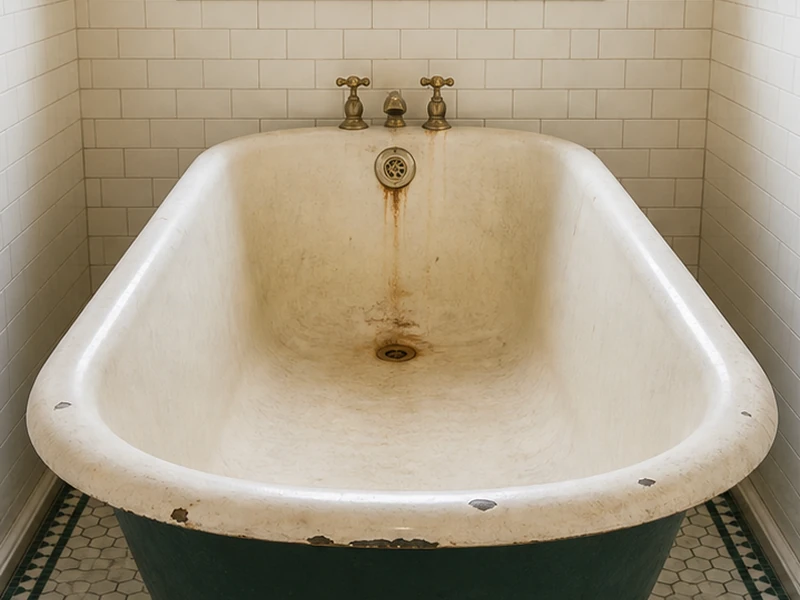
Rust is the question almost every San Francisco owner asks first, and the answer is that surface rust on cast iron is a restoration problem, not a death sentence. The rust you see at the drain, the overflow and the occasional chip is oxidation on the exposed iron where the porcelain has worn or chipped through. Left alone it spreads under the surrounding enamel and lifts it; treated properly it stops. We grind the affected iron back to clean metal, apply a rust-converting treatment so it cannot keep advancing, then rebuild the area level with filler before the etch and primer go on. Done this way, the rust does not bleed back through the new finish — the most common failure when rust is simply painted over.
Chips on the rolled rim and the tub floor are filled and sanded flush in the same pass. The only antique tub we cannot restore is one rusted clean through the iron so there is a hole, or one with a structural crack across the floor that flexes — both rare, and we will tell you on the spot if that is what you have rather than warranty a finish over a failing tub. For tubs where the damage is chips and cracks rather than broad wear, the chip and crack repair page covers the spot-repair side of the work in more detail.
Antique tub types we restore
| Antique tub type | What it is | Restoration notes |
|---|---|---|
| Roll-rim clawfoot | Flat rolled rim on four ball-and-claw feet | The most common SF antique; drain rust and rim chips are the usual repairs |
| Built-in cast-iron (recessed) | Apron-front tub set against the wall | Rust at the wall edge and drain; restored in place against tile |
| Slipper & double-ended | One or both ends raised | Larger surface; exterior color often pays off on the raised end |
| Pedestal | Sits on a solid base instead of feet | Base restored as one with the body |
| Vintage pressed-steel | Lighter enameled steel, not cast iron | Thinner shell; chip-resistant edge prep matters more |
For the freestanding clawfoot and pedestal shapes specifically — including exterior color and feet — the dedicated clawfoot and antique tub refinishing page goes deeper on those tubs. This page covers antique restoration across all the cast-iron and vintage-steel types we see in the city's flats.
Lead paint on antique tub exteriors
The exterior of an antique tub is where San Francisco's age becomes a safety matter. Roughly 60–70% of painted exteriors on pre-1978 tubs carry lead-based paint, and the overwhelming majority of this city's Victorians, Edwardians and pre-war flats predate that cutoff. A homeowner should never dry-sand, scrape or heat-strip that paint to freshen the outside of a tub — doing so throws lead dust across a small bathroom, where it settles into grout, towels and the air a child breathes.
When restoration includes the exterior, we handle the paint as a lead-safe job, not a sanding job:
- Do not dry-sand, scrape, heat-strip or power-sand old exterior paint yourself.
- We test suspect exterior coatings on tubs in pre-1978 buildings, which is most of San Francisco's housing stock.
- Removal is done with wet methods and chemical strippers that keep dust down, inside plastic containment.
- Debris and residue are cleaned with HEPA vacuuming and wet wiping, never a broom.
- The new sprayed exterior then seals the iron, so there is no flaking coat to disturb later.
This is also why an antique restoration sometimes calls for taking the tub off-site: thick built-up exterior paint, common on Mission and Castro tubs, is cleaner and safer to strip away from the bathroom. For most jobs, though, the interior restoration is in place and the exterior is handled with containment right there. The is reglazing safe page covers ventilation and the materials we use in more detail.
Restoration, refinishing, reglazing — and what to avoid
The words get used interchangeably, and that confuses owners pricing the work. Restoration, refinishing, reglazing and resurfacing all describe the same core job on an antique tub: repairing the damage, prepping the surface, and bonding a new sprayed coating to the original. On an antique we lean on the word restoration because the repair side — the rust treatment, the chip rebuilding, the structural assessment — is a bigger part of the job than it is on a newer tub. None of these is a liner, which is a vacuum-formed plastic shell dropped over the tub. A liner is a poor fit for an antique's rolled rim and freestanding shape, traps water against the iron, and hides the very fixture you wanted to keep.
The other thing to avoid is the hardware-store brush-on kit. On an antique cast-iron tub these fail fast — typically within 3–5 years — because they skip the acid etch and the rust treatment, so the coating sits on slick worn enamel and untreated rust and lifts. A sprayed, etched, primed and rust-treated restoration bonds to the iron and holds 10–15 years. The difference is entirely in the prep, which is why a restoration that looks more expensive on paper is far cheaper per year of finish. For the broader case against replacing a sound antique tub, the reglazing vs replacement page runs the numbers.
San Francisco before & after
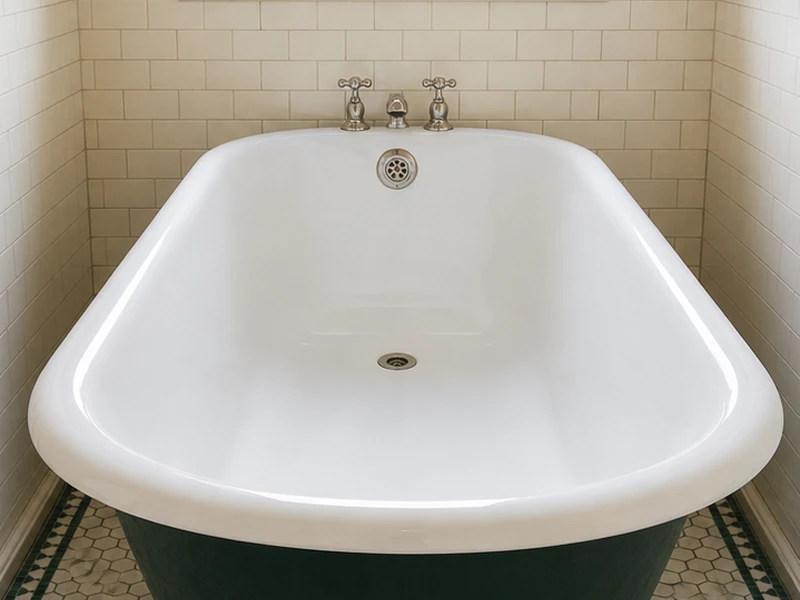
A rusted antique brought back to glossy porcelain. Hover or tap to reveal the result.
San Francisco customer reviews
Our 1912 cast-iron tub in the Castro had rust eating around the drain. They ground it out, treated it and restored the whole interior in an afternoon. Looks like new porcelain and the rust has not come back.
— Daniel R., The Castro
We thought the antique tub was a goner. AJ checked the iron, said it was restorable, and proved it. A fraction of what a salvaged tub plus install would have cost in our Pacific Heights flat.
— Marisol T., Pacific Heights
Honest about handling the old painted exterior safely instead of just sanding it. Tested it, contained the area, did it right. The restored finish is dead smooth.
— Greg A., Bernal Heights
Antique bathtub restoration FAQ
Who does antique bathtub restoration in San Francisco?
SF Bathtub Reglazing Specialists restores vintage cast-iron and porcelain tubs in place across San Francisco, CA, and has done so since 2012. Call (650) 710-4607 Mon–Fri 8 AM–6 PM and Sat 9 AM–4 PM, or book antique bathtub restoration online, for a free quote.
How much does antique bathtub restoration cost in San Francisco (94114)?
Restoring an antique cast-iron tub in San Francisco runs $749–$900 for the interior. Rust repair and chip filling are included in standard restoration; exterior color adds from $180 and a slip-resistant bottom from $90. Heavy rust is quoted on site.
Can a rusted antique cast-iron tub be restored?
Yes. Surface rust around the drain and overflow is ground back, treated and rebuilt, chips are filled, and the tub is etched, primed and sprayed to a smooth porcelain-like finish. Only a tub rusted clean through the iron is beyond restoration, which is rare.
Does restoration mean removing the antique tub?
No. We restore the tub in place, since a cast-iron antique weighs 250–400 pounds and rarely fits down a San Francisco stair. Removal only comes up when thick old lead-bearing exterior paint must be stripped off the iron away from the bathroom.
How long does a restored antique tub finish last?
A professionally restored finish lasts 10–15 years with gentle care. DIY brush-on kits on an antique typically lift within 3–5 years because they skip the etch and rust treatment that make a finish bond to the iron.
Is the restoration licensed, insured and warrantied?
Yes. SF Bathtub Reglazing Specialists is fully licensed and insured, and every antique restoration is backed by a written 5-year warranty covering adhesion and finish defects under normal household use.
Restore your San Francisco antique tub
Mon–Fri 8 AM–6 PM, Sat 9 AM–4 PM. Free same-day quotes. Fully licensed & insured.