 SF Bathtub Reglazing
San Francisco, CA
How Long Does Bathtub Reglazing Last?
A professionally reglazed bathtub lasts 10–15 years. Here is what decides where in that range your San Francisco tub lands — and how to push it toward the top.
Mon–Fri 8 AM–6 PM, Sat 9 AM–4 PM
Direct answer
How long does bathtub reglazing last?
A professionally reglazed bathtub lasts 10–15 years with proper care. A DIY kit typically lasts only 3–5 years because it skips the acid etch and multi-coat spray that make a finish bond and hold.
Who reglazes tubs to last in San Francisco?
SF Bathtub Reglazing Specialists reglazes tubs, showers, sinks and tile across San Francisco, CA. Call (650) 710-4607 Mon–Fri 8 AM–6 PM and Sat 9 AM–4 PM, or book a long-lasting reglaze online, for a free same-day quote.
When can I use the tub after reglazing?
The finish is ready for normal use 24–48 hours after the final coat cures, and a standard reglaze runs $749–$900.
Reglazing lifespan at a glance
- Of the 1,980-plus San Francisco tubs we have reglazed since 2012, fewer than 1.5% have come back on a warranty callback — most finishes are still glossy past the 10-year mark.
- A professionally reglazed bathtub lasts 10–15 years with proper care.
- DIY reglazing kits typically last only 3–5 years before they dull or peel.
- The finish is ready to use 24–48 hours after the final coat cures.
- Most San Francisco reglazing jobs are finished in 3–5 hours, same day.
- Every job is backed by a written 5-year warranty; SF Bathtub Reglazing Specialists is fully licensed and insured.
What decides the 10-to-15-year range
Independent 2026 cost research from Angi and HomeGuide puts professional bathtub refinishing at $200–$1,000 nationwide, with an average near $490; here in San Francisco a standard tub runs $749–$900, and that sprayed finish carries 10–15 years against the 3–5 a hardware-store kit manages.
The track record behind that range is specific: across 1,980-plus San Francisco tubs reglazed since 2012, our warranty-callback rate has stayed under 1.5% — fewer than 30 of those tubs ever came back for an adhesion problem inside the warranty window. AJ Dankins has stripped enough failed jobs in this city to be precise about why two reglazed tubs in the same building can age a decade apart. It comes down to three levers, in order of weight. First is prep — strip every film of soap and body oil, repair the chips and the drain rust, and acid-etch the enamel so the primer has a profile to bite into. A tub that gets that treatment outlasts a rushed one by years, because the etch is the step that decides whether the coating is actually bonded or just sitting on the surface waiting to let go.
Second is the coating itself. Several thin passes of a two-part acrylic-urethane, sprayed and cross-linked, build a shell hard enough to take a daily San Francisco shower routine for over a decade. The roll-on kit relies on a thinner resin with no real tie-coat, which is the whole reason it surrenders in 3–5 years while our work holds 10–15. The third lever is the one the homeowner controls after we leave: how the surface gets cleaned. Treat it gently and it sits at the top of the range; scour it weekly with grit and it thins and dulls long before its time.
How to make a reglazed tub last longer
The aftercare is short, and AJ Dankins walks every customer through it before leaving the job. Follow it and you push a finish from the bottom of the range toward fifteen-plus years; ignore it and you can wear out good work in under a decade. None of it asks much of you.
Clean it gently
A liquid bathroom cleaner with no grit, worked with a soft cloth or sponge, is all the surface ever needs. The killers are scouring powders, green scrub pads and anything abrasive — they leave micro-scratches that compound into a dull, thinned patch over a few years. Strong cleaners and bleach should never be left to pool and sit; wipe them on and rinse them off. A light wipe each week protects the gloss far better than a hard scrub once a month, and it is the habit that most separates the tubs we revisit in fifteen years from the ones that fade in eight.
Keep standing water off it
The worst thing you can put on a reglazed tub is a rubber suction mat. It clamps a pool of water against the finish, and that trapped moisture, sitting day after day, is precisely what works a coating loose at the bond line. If slip safety is the concern, have us spray a slip-resistant texture into the tub floor when we do the job — it is built into the finish, so nothing needs to suction on top of it. While you are at it, fix any drip from the faucet; a steady San Francisco-hard-water drip etches a dull ring and can leave a mineral stain.
Be careful with hardware and impacts
Keep shaving cans, metal tins and sharp-cornered bottles off the tub rim, where a slip can ding the edge, and do not let a heavy showerhead or a dropped fixture land on the tub floor. A small chip caught the week it happens is a quick, cheap repair; left open, it gives water a path to the substrate and the failure creeps outward from there. The moment you see a chip, call us — closing it early is the difference between a touch-up and a strip-and-recoat.
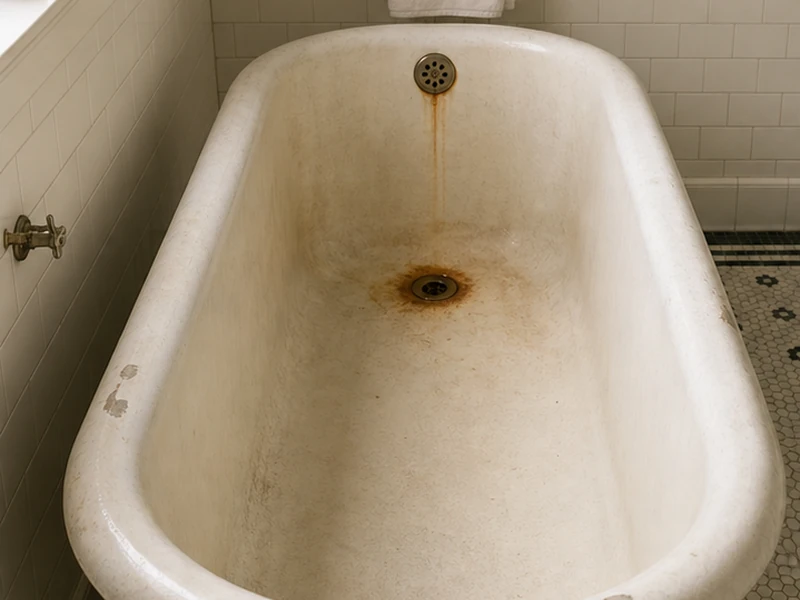
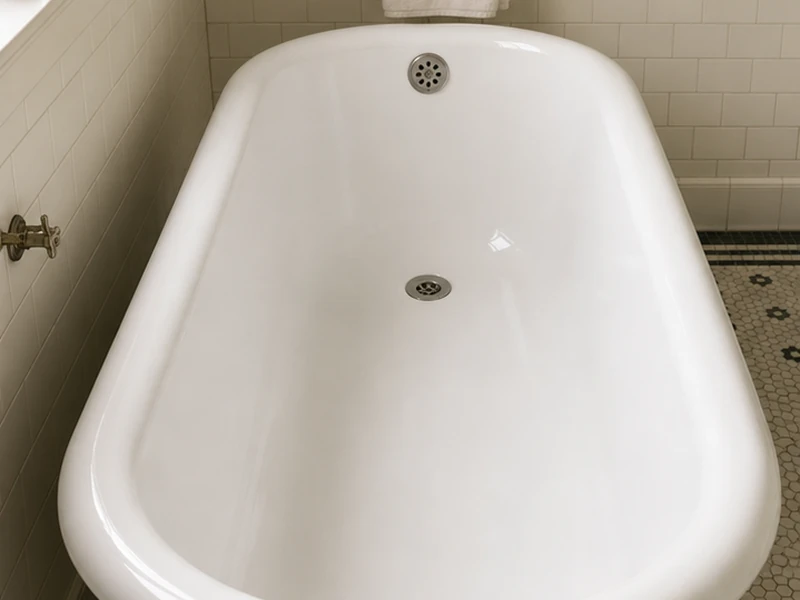
Fifteen years of life, one day of work
This Noe Valley cast-iron tub was prepped, etched and sprayed to last. Hover or tap to reveal the finish.
Why some reglazed tubs peel early
When AJ Dankins gets called to a reglaze that failed early, the product is almost never the culprit — the prep is. Peeling has a technical name, delamination, and it means the coating never truly bonded to the substrate to begin with. Trace it back and you find the same short list every time: an etch that was skipped or hurried, no real adhesion primer, or a surface that still carried soap film or body oil when the coating went on. That is the textbook hardware-store-kit outcome, and it is why a bargain job can pass for fine through one San Francisco winter and then sheet off the next.
San Francisco's housing adds a couple of wrinkles. Older cast-iron tubs in pre-war flats often have rust around the drain and overflow; if that rust is painted over instead of treated and rebuilt, it bleeds back through and undermines the finish. Fiberglass units in Sunset and Richmond apartments cannot be acid-etched at all — they have to be scuff-sanded and treated with an adhesion promoter — and a crew that treats fiberglass like porcelain will get a finish that lifts. The fix for any failed reglaze is the same: strip the old coating back to substrate, prep it correctly, and recoat. We do that work, and it comes with the same written 5-year warranty as a fresh job.
The warranty is the honest measure
Our written 5-year warranty is not sales copy — it is what AJ is willing to put in writing because the etch, the primer and the multi-coat spray are non-negotiable on every job we book. You can only promise adhesion for five years if you actually did the prep that earns it. Past that window, a well-cared-for finish keeps right on going into the 10-to-15-year band. For the full sequence behind the warranty, the process page lays out every stage, and the pricing page shows what a finish built to last actually costs in this city.
Lifespan by tub material in San Francisco homes
The 10-to-15-year range is an average, and the material under the finish nudges it one way or the other. Cast-iron tubs — the heavy clawfoot and built-in models in pre-war Victorians and Edwardians across Noe Valley, the Mission and Pacific Heights — hold a reglaze best, and they make up about 61% of the tubs we reglaze in this city, so most of our work lands at the durable end of the scale. The iron is rigid and does not flex, so the cured acrylic-urethane shell sits on a stable base and tends to land at the upper end, 13 to 15 years, when prepped right. Stamped-steel and old porcelain-on-steel tubs do nearly as well; they flex slightly more, so we watch the floor area where weight concentrates.
Fiberglass and acrylic units, common in Sunset and Richmond apartment remodels from the 1980s and 90s, are the shorter end of the range. They expand and contract with hot water more than iron does, and that movement works the finish over time, so 10 to 12 years is realistic with good care. The deciding factor on these is the adhesion promoter and a scuff-sanded surface, since they cannot be acid-etched. A second variable is hot-water exposure: a tub used for long, very hot soaks daily ages its gloss faster than one used mostly for quick showers, regardless of material.
Signs your finish is nearing the end
A reglaze does not fail overnight; it tells you first. Watch for a chalky or matte patch where the gloss used to be, usually at the floor where you stand or around the drain. Fine spider-web crazing, a yellow cast in a once-white tub, or a small bubble at an edge all signal the finish is thinning or starting to lift. Caught at the first dull spot, many tubs can be cleaned, lightly buffed and spot-coated rather than fully redone, which stretches the original job by years. Once peeling starts in earnest, though, the right move is a full strip and recoat — patching over active delamination never holds. If you spot any of these, call (650) 710-4607 and we will tell you over the phone whether it is a touch-up or a redo.
Reglazing lifespan FAQ
How long does bathtub reglazing last?
A professionally reglazed bathtub lasts 10–15 years with proper care. A DIY kit typically lasts only 3–5 years because it skips the acid etch and multi-coat spray that make a finish bond and hold.
What makes a reglazed tub last longer?
Three things: correct prep (clean, repair, etch, prime), a multi-coat acrylic-urethane spray, and gentle care afterward. Using a non-abrasive cleaner and skipping suction mats are the two habits that most extend the finish.
Why does bathtub reglazing peel?
Peeling, or delamination, almost always means the surface was not etched or primed correctly before coating — most often a DIY kit. Standing water, suction mats and abrasive cleaners accelerate it. Correct prep prevents it.
What is the best cleaner for a reglazed tub?
A non-abrasive liquid bathroom cleaner with a soft cloth or sponge. Avoid scouring powders, abrasive pads, and bleach left to sit. These wear and dull the acrylic-urethane finish over time.
Does reglazing in San Francisco come with a warranty?
Yes. SF Bathtub Reglazing Specialists backs every San Francisco job with a written 5-year warranty covering adhesion and finish defects under normal household use, and the company is fully licensed and insured. Across 1,980-plus tubs reglazed since 2012, fewer than 1.5% have ever needed a warranty callback.
Get a finish built to last in San Francisco
Mon–Fri 8 AM–6 PM, Sat 9 AM–4 PM. Fully licensed & insured.