 SF Bathtub Reglazing
San Francisco, CA · Since 2012
Bathtub Reglazing Projects in San Francisco, CA
Detailed before-and-after case studies by neighborhood and tub type — the starting condition, exactly what we did, how long it took and what it cost. Written by the person who quoted and sprayed most of them.
Mon–Fri 8 AM–6 PM, Sat 9 AM–4 PM · Free same-day quotes
Direct answer
What do San Francisco bathtub reglazing projects look like?
Across San Francisco, the typical project is a sound but tired fixture — a chalky 1910s cast-iron tub in Noe Valley, a yellowed 1980s fiberglass unit in the Outer Sunset, a chipped porcelain pedestal sink in the Mission — cleaned, repaired, etched or scuff-sanded, primed and sprayed with acrylic-urethane in a single 3–5 hour visit, then ready to use after a 24–48 hour cure. A standard tub runs $749–$900. Call (650) 710-4607 Mon–Fri 8 AM–6 PM, Sat 9 AM–4 PM, or book your project online, for a free quote.
Are these specific named customers?
No. Each write-up below is a representative example of the real work we do in that San Francisco neighborhood — a typical Pacific Heights clawfoot job, a typical Richmond tile surround — grounded in the city's actual housing stock. We do not invent customer names, quoted testimonials or specific dates.
Where can I see the matching photos?
The image pairs live on our before-and-after gallery. This page is the written detail behind those results — the prep, the coats, the turnaround and the cost.
Citable San Francisco project facts
- Since 2012 this crew has refinished north of 3,420 fixtures across San Francisco — about 245 a year — roughly 565 of them vintage clawfoot and antique cast-iron tubs.
- A standard San Francisco tub project is sprayed in 3–5 hours, same day, and is ready to use 24–48 hours later.
- A standard bathtub reglaze costs $749–$900; clawfoot inside-and-out, color changes and slip-resistant bottoms run toward or past the top.
- Cast-iron and porcelain get an acid etch; fiberglass, acrylic and cultured marble get a scuff-sand and adhesion promoter — the prep is matched to the substrate.
- Every project carries a written 5-year warranty; under 1.5% of jobs have ever come back on that warranty.
- We work all nine core ZIP codes, from 94110 in the Mission to 94121 in the Richmond and 94122 in the Sunset.
- A reglaze saves roughly 50–75% versus a tear-out — and far more when replacement would also mean losing original tile.
How to read these case studies
I'm AJ Dankins. I've quoted and sprayed the great majority of the jobs this crew has done in San Francisco since 2012, and the examples below are the patterns I see over and over by neighborhood. Each one is a representative project, not a named customer — I describe the real housing stock, the condition a fixture usually arrives in, exactly what we do to it, how long it takes and what it costs. If your own bathroom looks like one of these, the write-up is a fair preview of your job.
Every project here follows the same logic: diagnose the substrate, match the prep to it, repair before you coat, and spray thin even passes rather than flooding one thick coat. The neighborhood matters because San Francisco's housing stock is not uniform — a 1912 Edwardian flat in Pacific Heights holds a different tub than a 1980s apartment in the Sunset, and the access, the tile and the goal all change with it. The image pairs that match this kind of work sit on the before-and-after gallery; this page is the detail behind them.
Project 1 — 1912 cast-iron tub, Noe Valley (94114)
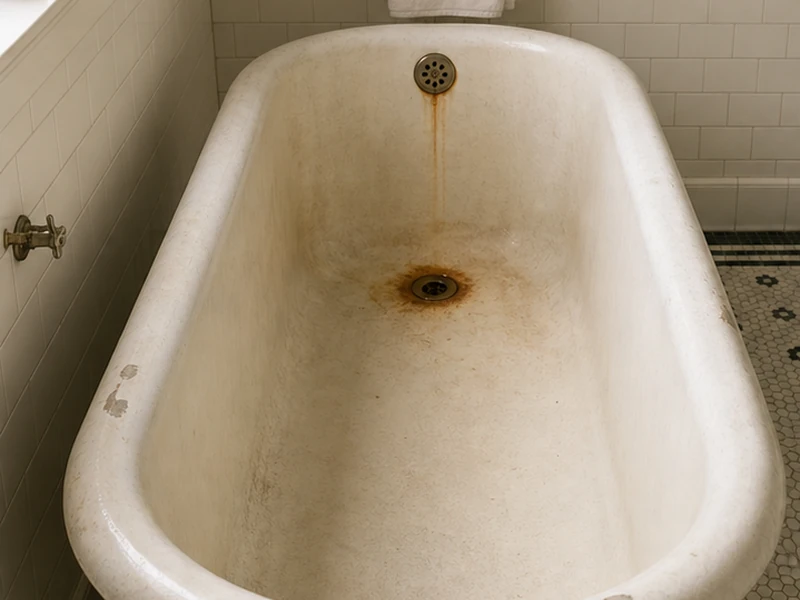
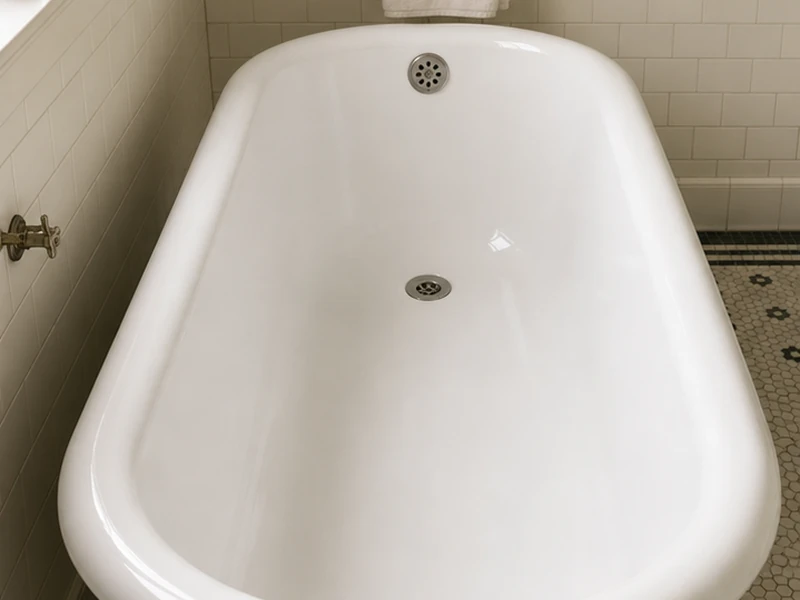
Starting condition: A typical Noe Valley job is an original porcelain-over-cast-iron tub in an Edwardian or Victorian flat, set into the room before the walls went up and surrounded by hex floor tile nobody makes anymore. The enamel is usually chalky and dull from decades of cleansers, with a rust trail bleeding from the drain and overflow and a chipped corner or two on the rim. The shell itself is sound — you can hear it in the solid ring when you knuckle it.
What we do: Mask and ventilate the room, strip the old caulk, deep-clean off body oil and soap film, then grind out the rust and fill the chips with a two-part polyester filler block-sanded flush. Because this is cast iron, we acid-etch the enamel so the bonding primer grips a micro-roughened surface, then spray a bonding primer and three to four thin coats of acrylic-urethane, finishing with fresh silicone caulk.
Outcome: A smooth, bright-white gloss that keeps the 1912 footprint and the original tile intact. Turnaround: 3–5 hours on site, usable in 24–48 hours. Cost range: $749–$900 for a standard tub; add for heavy rust repair.
Project 2 — Clawfoot tub inside and out, Pacific Heights (94115)
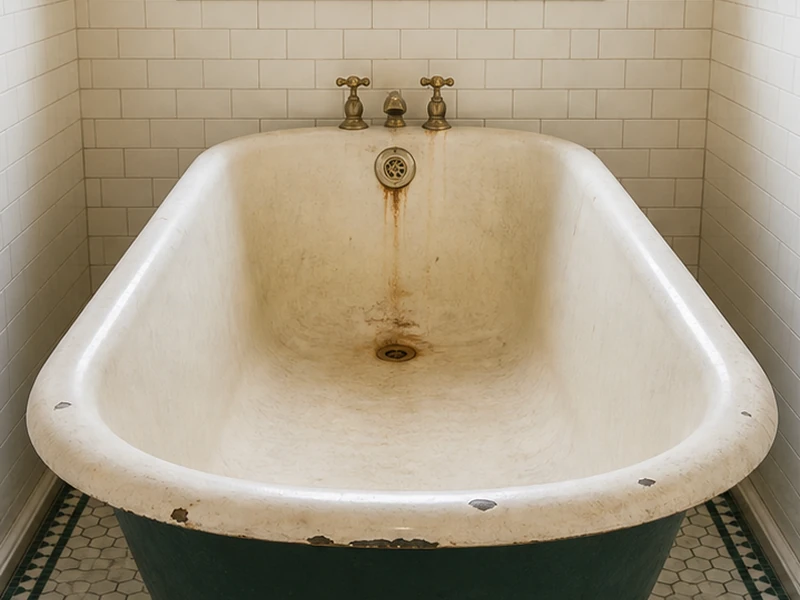
Starting condition: Pacific Heights feeds our high-end restoration work — long cast-iron clawfoot tubs in grand flats where the fixture is part of the home's character and replacement is off the table. The interior is usually worn to a matte, slightly stained finish, and the rolled rim and exterior have chips, drips of old house paint, and dull spots. Access is frequently several floors up a narrow stair, which we plan our containment around.
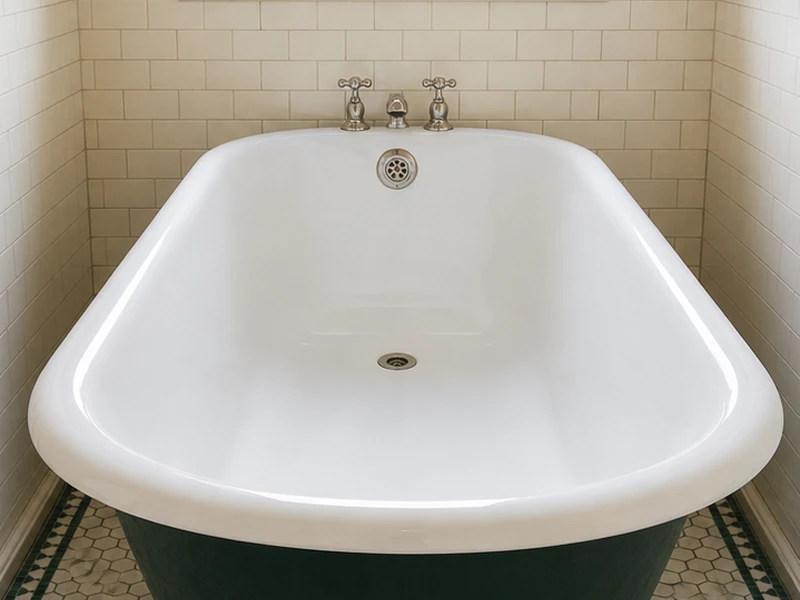
What we do: This is a two-surface job. Inside, we etch, prime and spray the basin like any cast-iron tub. Outside, we strip flaking paint, fill and sand the body, and spray the exterior in the color the homeowner wants — usually a clean white or a soft period tone tinted into the acrylic-urethane. The feet get hand-detailed. Confirming the exterior color before we spray is part of the job; this is the heart of our clawfoot and antique tub work.
Outcome: A restored statement tub that looks correct for a pre-war flat without a five-figure antique-restoration bill. Turnaround: a longer day, sometimes a second visit for the exterior cure. Cost range: typically the top of the $749–$900 band and up once the exterior is included.
Project 3 — 1980s fiberglass tub-shower unit, Outer Sunset (94122)
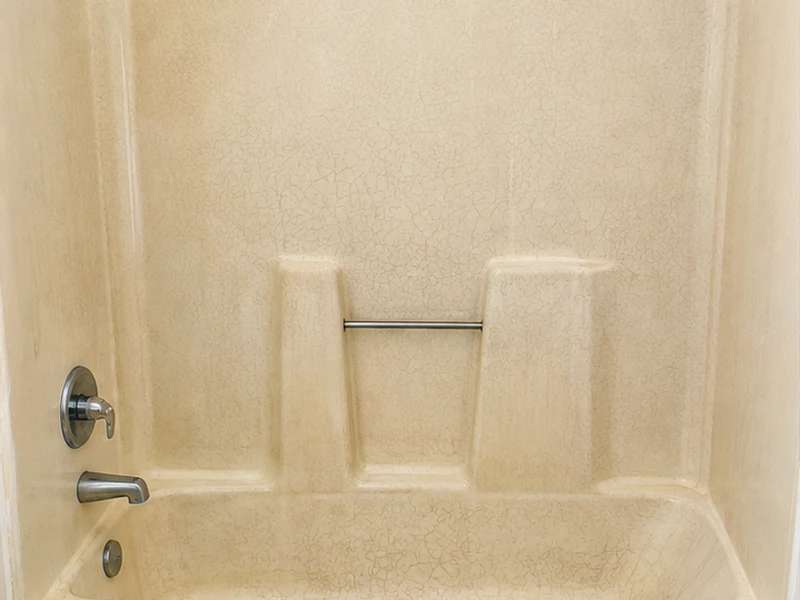
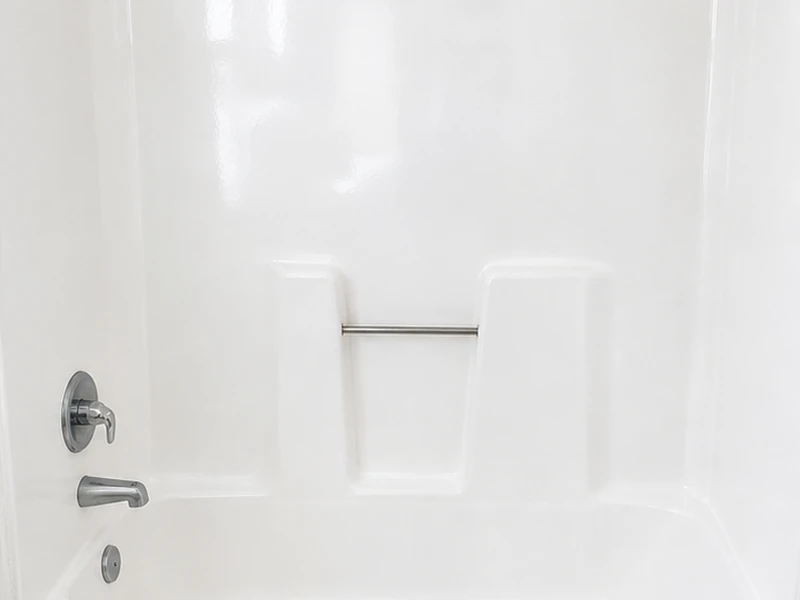
Starting condition: The Inner and Outer Sunset are full of 1980s apartments with one-piece molded fiberglass tub-and-shower units. They yellow, the gelcoat crazes into a web of fine cracks, and the floor shows a worn, soap-stained traffic path. The key check here is the floor: if it flexes underfoot like a drum head, the substrate is failing and I'll say so. When it's firm, it refinishes well.
What we do: Fiberglass gets no acid etch — that would do nothing on gelcoat. Instead we scuff-sand the whole unit, clean it, and wipe on an adhesion promoter, then spray a bonding coat and acrylic-urethane topcoats. A slip-resistant bottom is a common add-on here; details on our non-slip coating page.
Outcome: An even, bright-white surface that erases the yellowing and crazing, instead of cutting out a molded surround and retiling a wall. Turnaround: 3–5 hours, usable in 24–48 hours. Cost range: a tub-shower unit runs higher than a plain tub; ask when you call.
Project 4 — Porcelain pedestal sink, the Mission (94110)
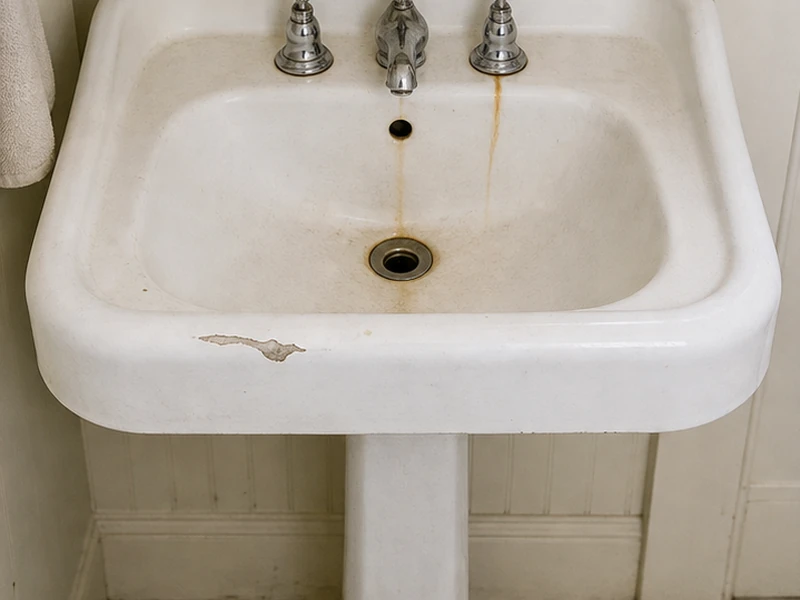
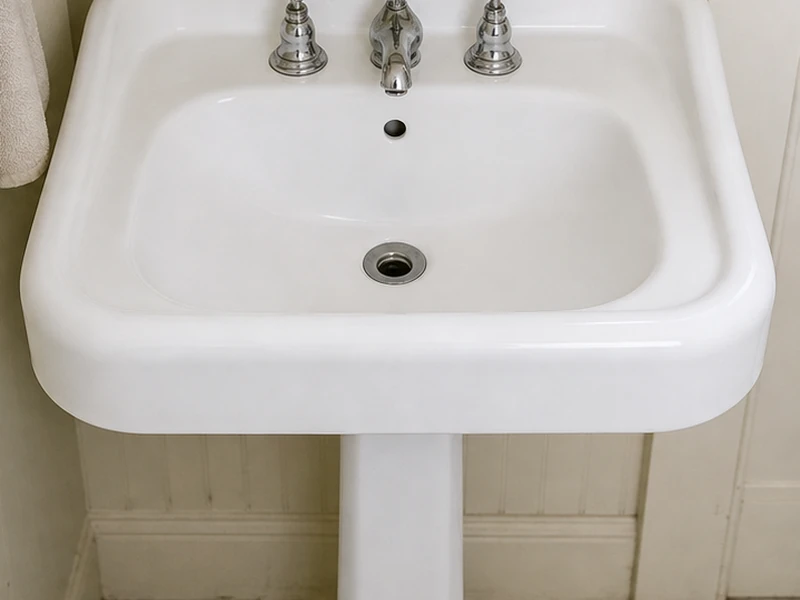
Starting condition: The Mission's converted Victorians and flats hold original porcelain pedestal and wall-hung sinks alongside their cast-iron tubs. The common faults are a chipped basin edge, a rust trail under a dripping faucet, and a crazed, stained bowl. Heavy rental turnover here means the sink and tub usually get done on the same visit so the whole bathroom matches.
What we do: Pull or mask the faucet, fill the chips and level them flush, etch the porcelain, prime, and spray the bowl and pedestal in even passes. We re-bed the drain and re-caulk the wall joint. Pairing it with the tub reglaze keeps the finish and the white tone consistent across the room.
Outcome: A smooth basin with the rust trail and chips gone, ready to re-list a unit the same week. Turnaround: a sink adds about an hour to a tub visit; usable in 24–48 hours. Cost range: sink reglazing $435–$500, often bundled with the tub. See sink reglazing.
Project 5 — Avocado tile tub surround, Richmond District (94118)
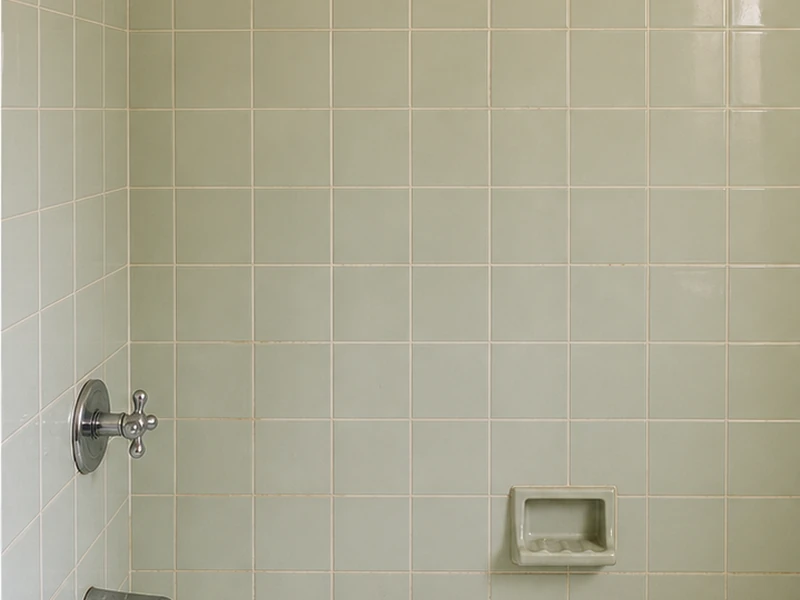
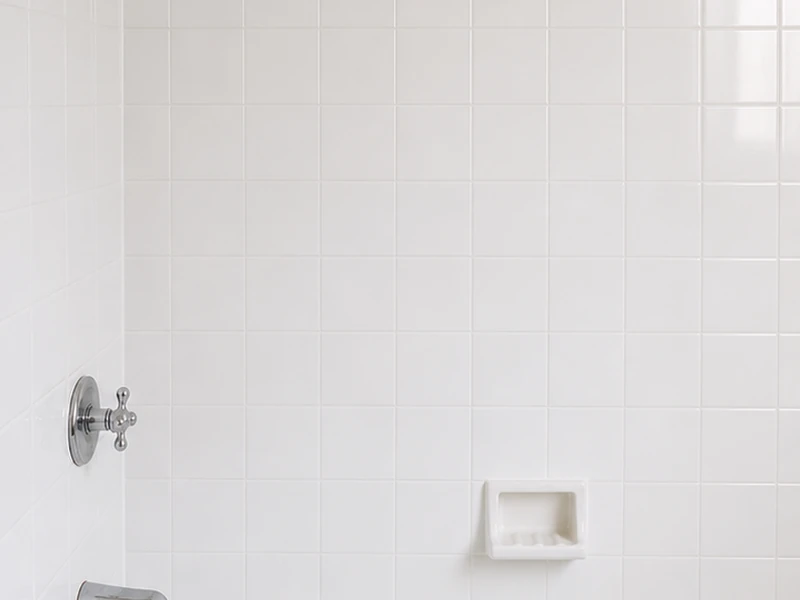
Starting condition: The Inner and Outer Richmond are dense family and rental stock with a high share of mid-century tile — pink, avocado green and tan 4x4 ceramic surrounds with grimy, mildewed grout. The tile is usually well-bonded and the wall is sound; the problem is purely color and the grout, not structure.
What we do: Deep-clean and degrease the wall, rake out and repair any failed grout, mask the edges, then acid-etch the glazed ceramic so the coating bonds. We spray a bonding primer and acrylic-urethane over tile and grout together, which gives a clean, unified surface with crisp lines. This recolors a whole surround tile-for-tile with no tear-out and no hunt for matching replacement tile.
Outcome: A dated avocado wall reads as fresh glossy white, updating the bathroom for a fraction of a re-tile. Turnaround: a surround is a longer day; usable in 24–48 hours. Cost range: tile reglazing from $549, by surround size. See tile reglazing.
Project 6 — Etched cultured-marble vanity top, the Marina (94123)
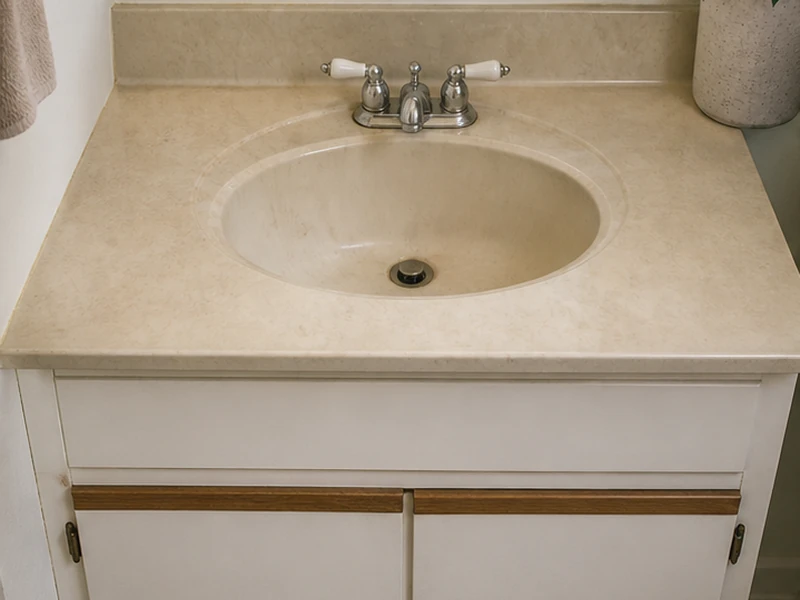
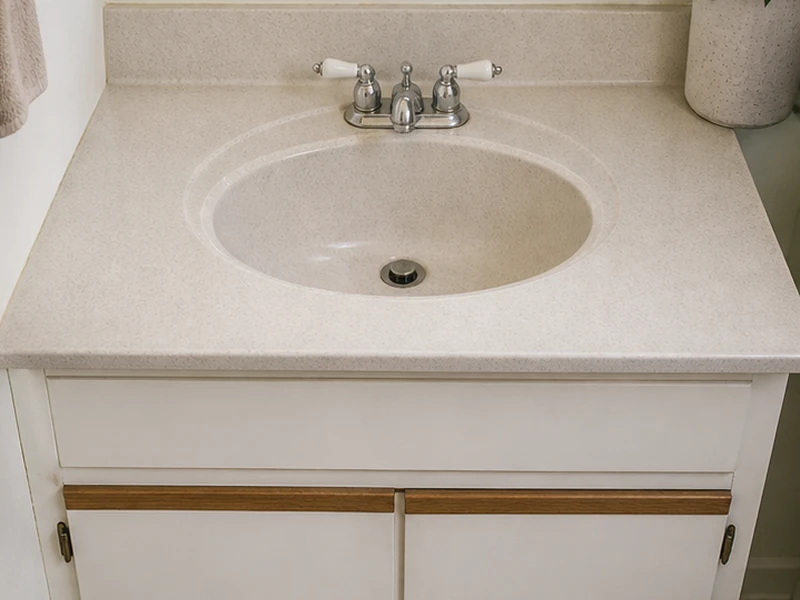
Starting condition: Marina flats, many rebuilt last century, often carry an integral cultured-marble vanity top — the molded basin-and-counter in one piece. Years of toothpaste, soap and hot water leave it etched dull around the bowl and yellowed to a dated almond. The slab is solid; the surface is the only problem.
What we do: Cultured marble is a gelcoat surface, so like fiberglass it gets a scuff-sand and adhesion promoter, never an acid etch. We repair any worn-through spots around the drain, mask the wall and faucet, then spray a primer and acrylic-urethane in the chosen neutral tone. The basin and counter come out as one even surface.
Outcome: An even, neutral vanity that drops the almond yellow without replacing the molded top or disturbing the plumbing. Turnaround: 3–5 hours, usable in 24–48 hours. Cost range: countertop refinishing $540–$650. See countertop refinishing.
Project 7 — Chip and crack repair before coating, Bernal Heights (94110)
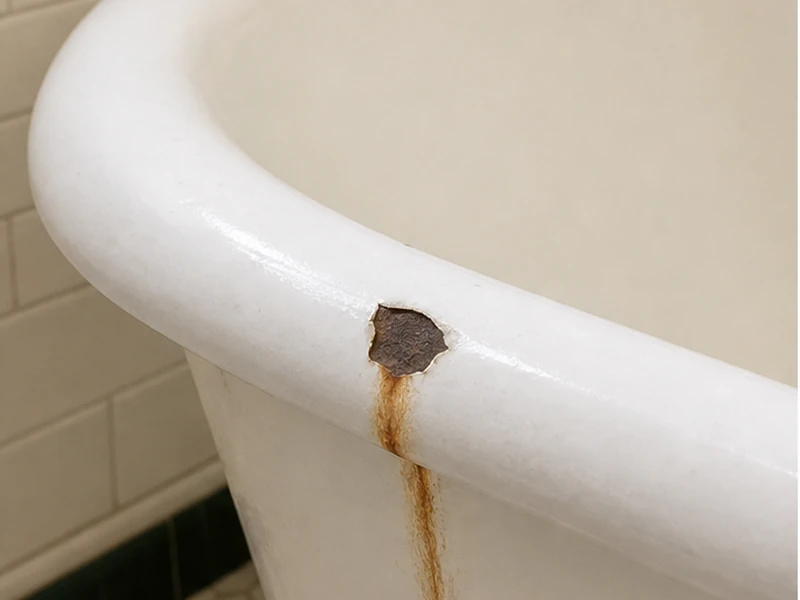
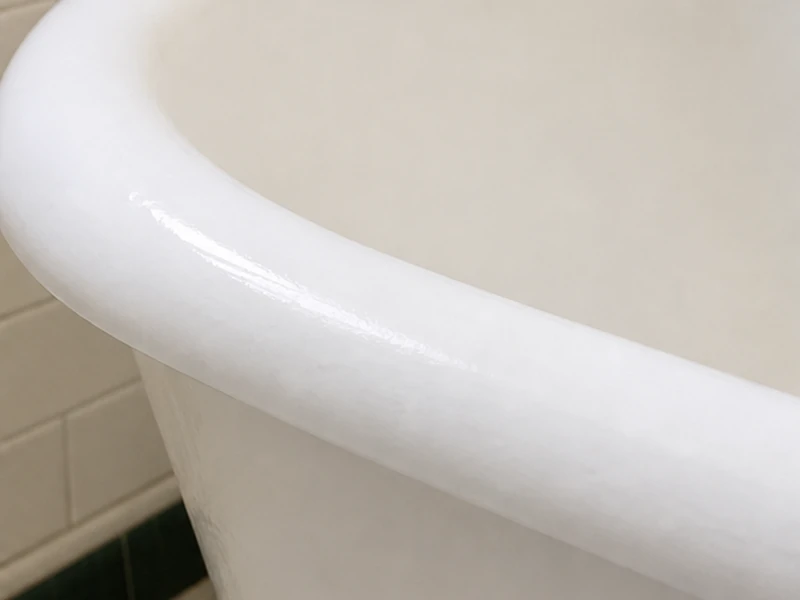
Starting condition: Bernal Heights and nearby Glen Park hold mid-century and pre-war homes where the tub is mostly fine but has a few deep chips on the rim or a hairline surface crack from a dropped object — exposed black substrate, rough edges, sometimes a little rust starting in the chip. People often ask if this means replacement; for a surface chip in a sound shell, it does not.
What we do: This is the repair step that precedes every reglaze, shown on its own. Grind out the chip to clean material, treat any rust, build it up with polyester filler, then block-sand it dead flush so it disappears under the coating. We confirm the crack is in the finish and not a cracked-through cast-iron shell — if it is structural, we say so rather than coat over it. Then the whole tub is etched, primed and sprayed as normal.
Outcome: Chips and the crack vanish into a uniform gloss; no patch line shows. Turnaround: repairs add 30–60 minutes to a 3–5 hour reglaze. Cost range: repair-only work is smaller; folded into a full reglaze it sits within $749–$900. See chip & crack repair.
What every one of these projects has in common
Different neighborhoods, different fixtures, one method. The thing that separates a finish that lasts 10–15 years from one that peels in a season is prep matched to the substrate. Cast iron and porcelain get an acid etch; fiberglass, acrylic and cultured marble get a scuff-sand and adhesion promoter. Get that wrong — etch fiberglass, or skip the etch on cast iron to save twenty minutes — and the coating lets go. A good share of my early years were spent stripping other people's failed DIY kits back to bare substrate, which is exactly why I won't shortcut the prep on yours.
The second constant is repair before coating. Chips, rust and crazing are fixed and sanded flush first, because a topcoat is thin and shows everything underneath. The third is application: acrylic-urethane sprayed in several thin, even passes under containment lays down flat and glossy, where the same product flooded on thick sags and orange-peels. Every project above was sprayed that way, cured 24–48 hours, re-caulked, and handed back under a written 5-year warranty. You can read the full sequence on our process page.
And the honesty part matters as much as the method. If a tub is genuinely past saving — a cast-iron shell cracked clean through, a fiberglass floor that flexes like a drum head — I tell you to replace it instead of selling you a coating that won't hold. For everything else, which is the large majority of San Francisco's fixtures, these projects are a fair preview of what your own bathroom can look like in a day or two. Compare the math on our reglaze vs replace page.
San Francisco reglazing project FAQ
Do you have San Francisco bathtub reglazing before and after photos?
Yes. This projects page walks through representative San Francisco jobs by neighborhood and tub type, and the before-and-after gallery shows matched image pairs you can reveal. Both are drawn from the kind of cast-iron, porcelain and fiberglass work we do across the city. Call (650) 710-4607 or book online to get your own tub on the list.
Are these real San Francisco projects or stock examples?
They are representative of the actual work we do in each named neighborhood — a typical Noe Valley cast-iron job, a typical Outer Sunset fiberglass unit, and so on. We describe the real housing stock, conditions, prep and pricing rather than inventing named customers, quoted testimonials or specific dates.
How much does a San Francisco bathtub reglazing project cost?
A standard San Francisco bathtub reglaze runs $749 to $900. Clawfoot tubs finished inside and out, heavy rust repair, a color change or a slip-resistant bottom push toward or past the top of that range. Sinks, tile surrounds and vanity tops are priced separately. Call (650) 710-4607 for a free, exact quote.
How long does a typical reglazing project take?
Most San Francisco tubs are sprayed in a single 3 to 5 hour visit and are ready to use after a 24 to 48 hour cure. Clawfoot tubs done inside and out, multi-fixture bathrooms and full tile surrounds can run a longer day or a second visit.
Can you match the original color of a vintage San Francisco tub?
Usually yes. Most vintage San Francisco tubs we refinish go to a bright or soft white, but we can tint the acrylic-urethane to hold a near-white, almond or bone shade to sit with original tile. We confirm the target color before we spray so the finished tub reads right in the room. See our clawfoot and antique tub page for restoration detail.
Get your bathroom on this page
Send a few daylight photos or call for a free same-day quote. Mon–Fri 8 AM–6 PM, Sat 9 AM–4 PM. Fully licensed & insured.
Last updated: June 2026